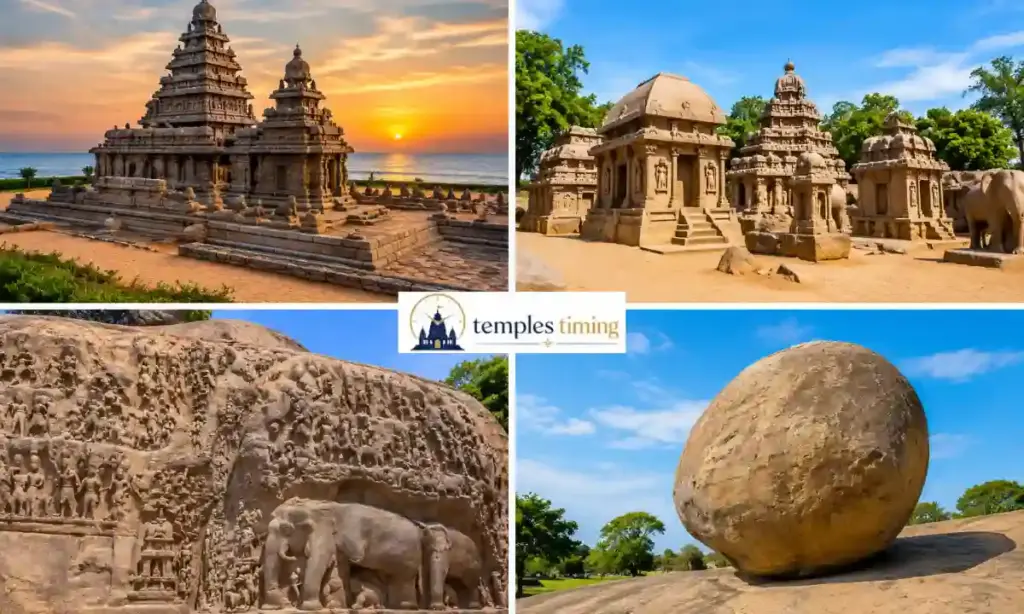
Mahabalipuram Temple Timings are important for visitors planning a trip to the famous ancient temples and monuments of Mahabalipuram in Tamil Nadu, India. Also known as Mamallapuram, this historic coastal town is well known for its beautiful stone temples, rock-cut sculptures and traditional Dravidian architecture. The Shore Temple is the most famous attraction in the area and stands near the Bay of Bengal.The main monuments of Mahabalipuram generally open from 6:00 AM to 6:00 PM. Visitors can explore the Shore Temple, Pancha Rathas, Arjuna’s Penance and several ancient cave monuments during these hours. Mahabalipuram is also a UNESCO World Heritage Site, recognised for its remarkable architectural heritage dating back to the Pallava dynasty.
Mahabalipuram Temple Timings Today
The Shore Temple and the major Archaeological Survey of India (ASI) monuments in Mahabalipuram generally follow the same visiting hours. Visitors should arrive early to explore the monuments comfortably and avoid the afternoon heat.
| Details | Timings and Information |
|---|---|
| Opening Time | 6:00 AM |
| Closing Time | 6:00 PM |
| Visiting Days | Generally open daily |
| Best Time to Visit | Early morning or late afternoon |
| Recommended Duration | 3–5 hours for the main monuments |
| Location | Mahabalipuram, Tamil Nadu, India |
| Monument Management | Archaeological Survey of India (ASI) |
Timings may vary for particular attractions, maintenance work or special circumstances. Visitors should confirm the schedule locally before travelling.
Shore Temple Timings
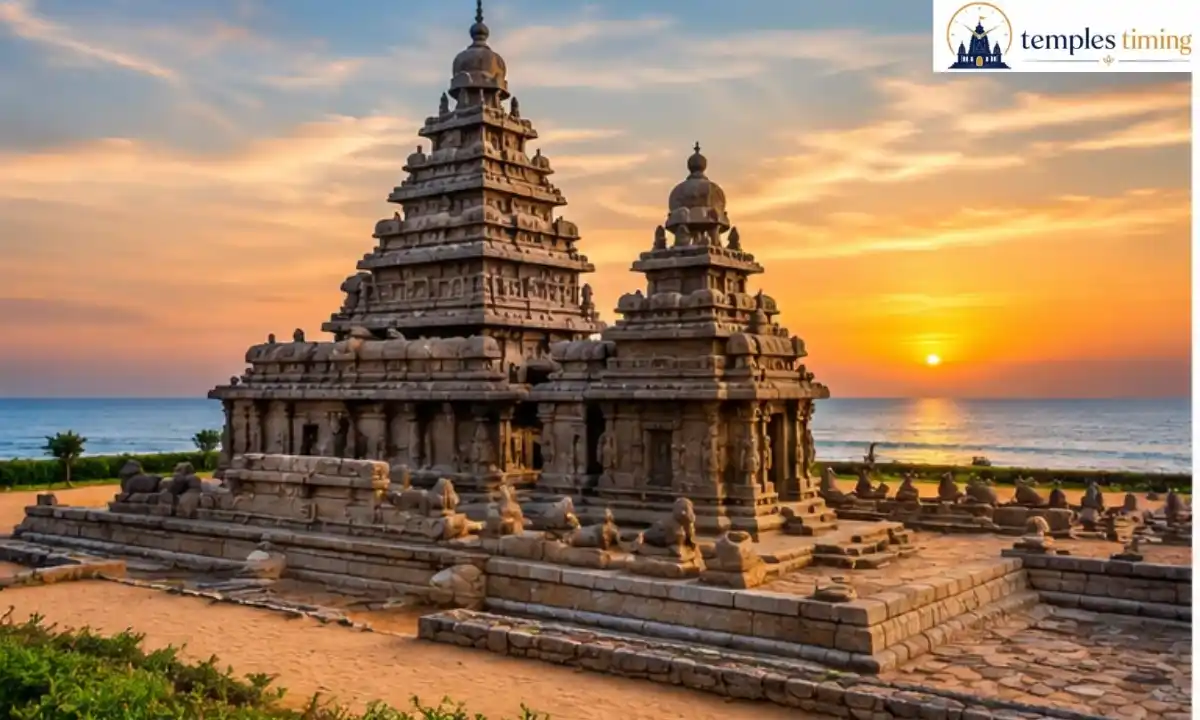
The Shore Temple is the most recognised temple in Mahabalipuram. It is situated close to the sea and is admired for its impressive stone towers, detailed carvings and ancient architectural design. Shore Temple visiting hours are generally 6:00 AM to 6:00 PM. Morning is a good time to enjoy the coastal scenery and explore the temple complex before the weather becomes too hot. The temple complex contains shrines associated with Lord Shiva and Lord Vishnu. Its location beside the Bay of Bengal makes it one of the most distinctive historic temple sites in South India.
Location of Mahabalipuram Temple
Mahabalipuram Temple is located in Mahabalipuram (Mamallapuram), Chengalpattu district, Tamil Nadu, India, along the Bay of Bengal coast. The famous Shore Temple is situated near Mahabalipuram Beach, approximately 60 km from Chennai. Visitors can reach the temple by road using the East Coast Road (ECR). Chennai International Airport is the nearest major airport, while Chengalpattu Junction is one of the nearby railway stations. Mahabalipuram is well connected to Chennai by buses, taxis and private vehicles, making it a popular destination for tourists interested in ancient temples, history and Dravidian architecture.
Pancha Rathas Timings
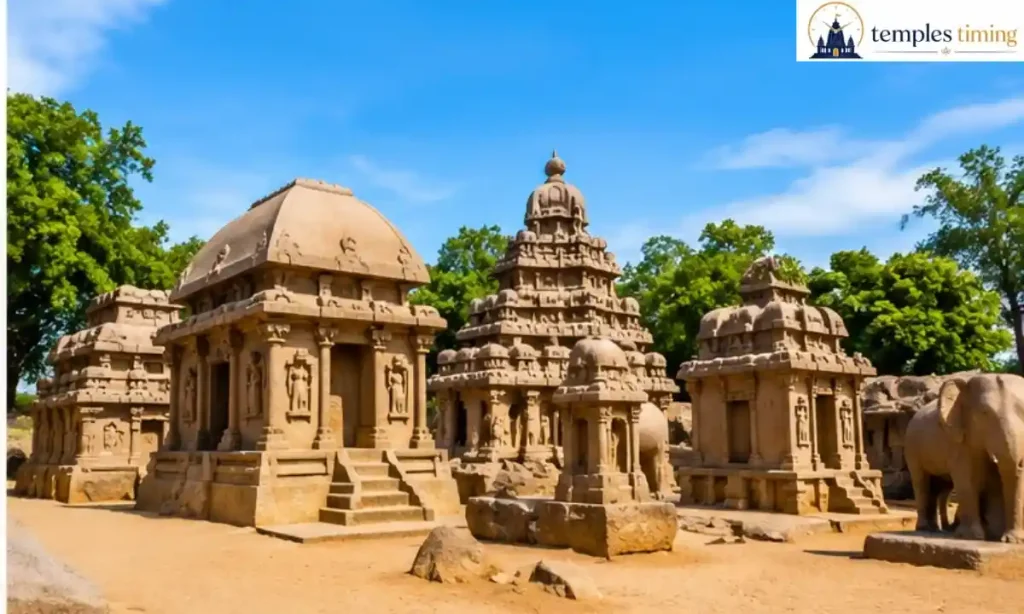
Pancha Rathas, also known as the Five Rathas, is another important attraction in Mahabalipuram. These impressive structures were carved from large rocks and represent important developments in Pallava architecture. The usual visiting hours are 6:00 AM to 6:00 PM. Visitors can explore the five main rathas, examine their different architectural styles and learn about the stone-carving techniques used by ancient artisans. Although the structures are commonly associated with the Pandavas of the Mahabharata, they are primarily valued today as historic architectural monuments.
Arjuna’s Penance Timings
Arjuna’s Penance is a remarkable open-air stone relief depicting scenes from Hindu mythology and nature. It is also widely associated with the Descent of the Ganges. Visitors can generally see this monument between 6:00 AM and 6:00 PM. The enormous carved surface includes figures of deities, humans, animals and other mythological elements. Allow around 20–30 minutes to appreciate the details and take photographs from suitable public viewing areas.
Mahabalipuram Temple Entry Fee 2026
Entry charges can depend on the monument ticket category, nationality and current ASI rates. The following table provides a general reference, but visitors should verify the latest charges at the ticket counter.
| Visitor Category | Previously Published Fee |
|---|---|
| Indian visitors | ₹10 |
| Foreign visitors | ₹250 |
| Children below 15 years | Free |
These are previously published rates and may not reflect the latest 2026 prices. Some tickets cover multiple protected monuments, so visitors should check which attractions are included before purchasing a ticket.
History of Mahabalipuram Temples
The temples and monuments of Mahabalipuram reflect the artistic achievements of the Pallava dynasty during the 7th and 8th centuries. The Pallava rulers supported the development of rock-cut caves, monolithic structures and stone temples that influenced South Indian architecture. King Narasimhavarman I, also known as Mamalla, is associated with the development of several important monuments in the town. The Shore Temple is particularly associated with Narasimhavarman II, also known as Rajasimha. In 1984, the Group of Monuments at Mahabalipuram was recognised as a UNESCO World Heritage Site. Today, the area attracts tourists, history enthusiasts, architecture students and visitors interested in India’s ancient cultural heritage.
Famous Temples and Places to Visit in Mahabalipuram
1. Shore Temple
The Shore Temple is the most famous landmark in Mahabalipuram. It features impressive granite structures and shrines associated with Lord Shiva and Lord Vishnu. Its seaside setting makes it especially attractive for visitors interested in history and photography.
2. Pancha Rathas
Pancha Rathas consists of five monolithic monuments carved from large rock formations. Each structure has a distinctive design and demonstrates the remarkable skills of Pallava craftsmen.
3. Varaha Cave Temple
The Varaha Cave Temple is a historic rock-cut shrine featuring beautiful sculptural panels associated with Lord Vishnu. The Varaha incarnation of Vishnu is an important theme in the cave’s artwork.
4. Mahishasuramardini Mandapam
This cave monument is known for its detailed sculptures depicting Goddess Durga fighting Mahishasura. It also contains a celebrated representation of Lord Vishnu reclining on the serpent Ananta.
5. Ganesha Ratha
Ganesha Ratha is a distinctive monolithic structure associated with Lord Ganesha. It is an important example of the architectural creativity found throughout Mahabalipuram.
6. Krishna’s Butter Ball
Krishna’s Butter Ball is a huge natural boulder resting on a sloping rock surface. Although it is not a temple, it is one of the town’s best-known attractions and is popular with families and photographers.
Best Time to Visit Mahabalipuram Temples
The best time to visit Mahabalipuram is generally from November to February, when the weather is comparatively comfortable for sightseeing. Early mornings are suitable for exploring the Shore Temple and other outdoor monuments. Late afternoons also offer pleasant opportunities to enjoy the coastal scenery, although visitors should plan to enter ticketed monuments within their permitted visiting hours. The summer months can be hot and humid, so carrying drinking water, sunscreen and a hat is advisable.
How to Reach Mahabalipuram Temple
By Road
Mahabalipuram is approximately 60 kilometres from Chennai by road, depending on the starting point and route. Visitors can travel by private car, taxi or bus via the East Coast Road.
By Train
Chengalpattu Junction is one of the nearby major railway stations. From there, visitors can continue to Mahabalipuram by road. Travellers arriving at Chennai’s railway stations can also use road transport to reach the town.
By Air
Chennai International Airport is the nearest major airport for most travellers. After arriving, visitors can hire a taxi or use other available transport services to reach Mahabalipuram.
Travel Tips for Mahabalipuram Temple Visit
- Start early to explore more monuments before the afternoon heat.
- Wear comfortable walking shoes because several attractions require walking outdoors.
- Carry drinking water, sunscreen and a hat.
- Check ticket prices and the opening hours of individual attractions before visiting.
- Keep the historic stone structures clean and avoid touching or damaging the carvings.
- Allow at least half a day if you want to explore the major monuments at a relaxed pace.
Conclusion
Mahabalipuram Temple Timings are generally 6:00 AM to 6:00 PM for the Shore Temple and several major monuments, making it possible to explore the town’s historic attractions in a single day. From the beautiful Shore Temple and Pancha Rathas to the impressive carvings of Arjuna’s Penance and Varaha Cave Temple, Mahabalipuram offers a memorable combination of history, architecture and coastal scenery. For a comfortable visit, plan your trip during the cooler months, arrive early and confirm the latest ticket prices and opening hours before departure.
FAQs
What are the Mahabalipuram Temple Timings?
The Shore Temple and several major protected monuments generally open at 6:00 AM and close at 6:00 PM.
Is Mahabalipuram Temple open every day?
The principal monuments are generally open daily, but visitors should confirm local schedules in case of maintenance or special closures.
What is the entry fee for Mahabalipuram Temple?
Entry fees depend on the monument ticket and visitor category. Older published information lists ₹10 for Indian visitors and ₹250 for foreign visitors, but current rates should be checked before travelling.
How much time is needed to visit Mahabalipuram?
Around 3–5 hours is a reasonable estimate for exploring the major monuments. Visitors interested in the beach, lighthouse and local stone-carving shops may need a full day.
Which is the most famous temple in Mahabalipuram?
The Shore Temple is the town’s best-known temple and one of its most important historical landmarks.
What is the best time to visit the Shore Temple?
Early morning is a good choice for cooler weather, fewer crowds and beautiful coastal views.
Is Mahabalipuram a UNESCO World Heritage Site?
Yes. The Group of Monuments at Mahabalipuram was inscribed on the UNESCO World Heritage List in 1984.
Also Read About: Nathdwara Temple Timings: Darshan Schedule, Pooja, History and Travel Guide