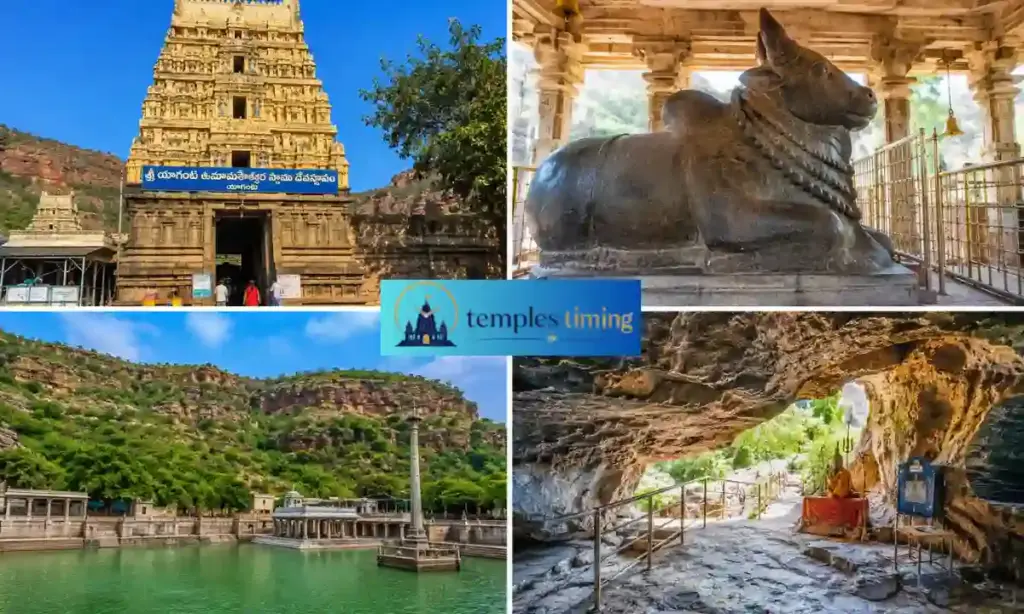
Sri Yaganti Uma Maheswara Swamy Temple, located in the Erramala Hills, Nandyal, Andhra Pradesh, is considered to be one of the most sacred shrines of Lord Shiva in South India. It is different from any other temple dedicated to Lord Shiva since it is well-known for its unique idol of Lord Shiva and his consort Parvati cut out of a single stone, an ever-growing Nandi idol, the sacred caves, and a pristine Pushkarini, which is filled with fresh water all year long.
Hundreds of pilgrims throng this ancient temple each month in order to receive divine blessings of Lord Uma Maheswara on various religious festivals such as Maha Shivaratri, Karthika Masam, and others. Whether you are going on a pilgrimage or tourism tour, learning about Yaganti Temple timings, schedule of pujas and sevas, history and travelling tips will definitely be helpful. The below guide is designed to help you to get acquainted with Yaganti Temple in detail.
Why Should You Visit Yaganti Temple?
Yaganti Temple is far more than just a place of worship; rather, it is a site that combines spirituality, history, and nature in one perfect amalgamation. Nestled in the midst of the rocky terrain of the Erramala Hills, the Yaganti Temple provides a serene setting that allows the pilgrims to get disconnected from their day-to-day hustle and bustle.
Yaganti Temple Timings
The temple follows a fixed daily schedule for darshan, allowing devotees to visit both in the morning and evening. The afternoon closure is reserved for temple rituals and maintenance.
| Darshan | Timings |
|---|---|
| Morning Darshan | 6:00 AM – 1:00 PM |
| Afternoon Break | 1:00 PM – 3:00 PM |
| Evening Darshan | 3:00 PM – 8:00 PM |
During major festivals like Maha Shivaratri, Karthika Masam, and other important Hindu celebrations, the temple may remain open for extended hours to accommodate the large number of devotees. Visitors are advised to arrive early in the morning to enjoy a peaceful darshan and avoid long waiting lines.
Yaganti Temple Location
Yaganti Temple is situated in the serene village of Yaganti in the vicinity of Banaganapalle in Nandyal district of the state of Andhra Pradesh, India. Situated amidst the captivating Erramala Hills, the temple is famous for its scenic beauty and calmness, which makes it one of the most favorite places of pilgrimage for devotees of Lord Shiva in South India.
Yaganti Temple Daily Pooja Timings
The temple performs several daily rituals dedicated to Lord Uma Maheswara. These ceremonies follow traditional Shaivite customs that have been practiced for centuries.
| Ritual | Approximate Time |
|---|---|
| Temple Opening | 6:00 AM |
| Suprabhata Seva | 6:00 AM |
| Morning Abhishekam | 7:00 AM |
| Alankaram | 8:00 AM |
| Morning Harathi | 8:30 AM |
| Madhyahna Pooja | 12:00 PM |
| Evening Reopening | 3:00 PM |
| Evening Harathi | 7:00 PM |
| Temple Closing | 8:00 PM |
Participating in the morning Abhishekam or evening Harathi offers devotees a spiritually uplifting experience. The chanting of Vedic hymns, the fragrance of incense, and the peaceful surroundings create an atmosphere of divine serenity.
Yaganti Temple Entry Fee
One of the best aspects of visiting Yaganti Temple is that there is no entry fee for general darshan. Devotees can enter the temple premises free of charge and offer prayers without purchasing a ticket.
| Service | Charges |
|---|---|
| General Entry | Free |
| General Darshan | Free |
| Parking | Applicable for vehicles |
Special sevas and rituals are available for devotees who wish to perform personalized worship.
Yaganti Temple Seva and Ritual Costs
The temple offers several sevas that devotees can book to seek the blessings of Lord Shiva. The charges are nominal and may be revised by the temple administration from time to time.
| Ritual | Approximate Cost |
|---|---|
| Special Darshan | ₹50 |
| Rudrabhishekam | ₹200 |
| Mahanyasa Rudrabhishekam | ₹750 |
| Ekadasa Rudrabhishekam | ₹1,116 |
Devotees should confirm the latest charges at the temple counter before booking any seva.
History of Yaganti Temple
The history of Yaganti Temple is more than thousand years old and has deep roots in the Hindu mythology as well as South Indian history. Ancient stories say that this temple is strongly connected with Sage Agastya, who is known as one of the respected Sages referred to in the Vedas and Puranas.
There was an assumption that Sage Agastya decided to install an idol of Lord Venkateswara on the temple territory. Nevertheless, when he started to prepare for this, he noticed that the toe of the idol had been broken. According to the tradition, it is not possible to install the broken idol in a temple. Feeling very upset, the sage started to meditate, seeking the divine intervention of Lord Shiva.
Pleased by the devotion of the sage, the Lord appeared in front of him and said that the spiritual power of this place was perfect for His worship. The Lord advised Sage Agastya to install His idol in the form of Sri Uma Maheswara, that means that both Lord Shiva and Goddess Parvati will be worshipped in this temple in the same stone idol at the same time. It is the only temple where Lord Shiva is not
Why is Yaganti Temple Famous?
Unlike other shrines of Lord Shiva, Yaganti Temple is one of those shrines whose uniqueness lies in the presence of several mysteries, myths, and natural splendor that have added immense significance to the temple.
One of the features that have gained huge popularity about the temple is the growing statue of Nandi. While the Nandi statue is a common practice in all Hindu temples, what makes Yaganti Temple unique is the mystery associated with its growth. Unlike other ordinary stone idols, the Nandi at this temple is known to grow slowly. Due to this unique and mysterious characteristic of the temple, pilgrims from far-off places visit here to offer their prayers.
Uma Maheswara idol is one of the unique aspects of this shrine, where the two deities, Shiva and Parvati are worshipped in one idol. The worship of two divinities in one idol represents the harmony of masculine and feminine power, and hence it is believed to be very auspicious for couples and families.
The Mystery of the Growing Nandi
One of the major draws of Yaganti Temple is the huge stone statue of Nandi, the sacred bull and also the vehicle of Lord Shiva. As per the folklore, the idol of Nandi has been increasing in size ever since centuries back. The elderly priests and locals have always narrated stories about how the area surrounding the statue has slowly decreased over time.
As per the belief of the temple, one of the saints of repute named Sri Potuluri Veera Brahmendra Swamy had prophesied that the statue of the Nandi will continue growing until it comes alive at the end of Kali Yuga. Thus, because of the prophecy, the idol has been worshiped by all devotees.
Though there are several reports about the increasing growth of the statue over time, still the real cause of such an event is unknown.
Spiritual Significance of Yaganti Temple
Devotees consider Yaganti Temple as not just a place for offering prayers but a place for transformation of their souls. The calm environment, traditional rituals, and sanctity make devotees engage in meditation, praying and attunement with themselves.
Sincere prayers offered at Yaganti can clear the way of devotees and help gain strength, improve faith, and achieve mental peace. The existence of Lord Shiva and Goddess Parvati together is thought to be extremely helpful for family and conjugal bliss.
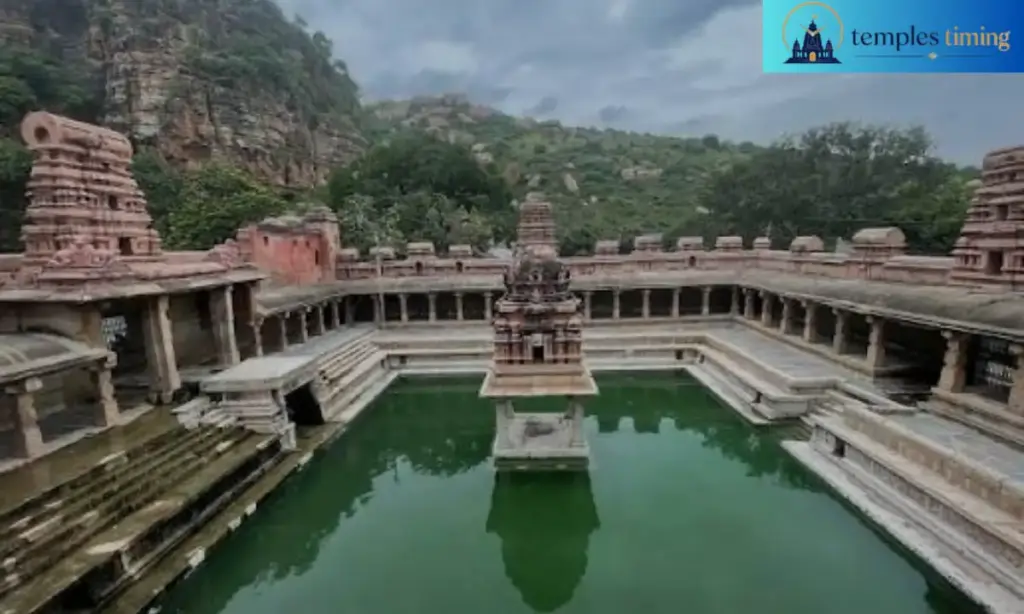
There is one other holy element in Yaganti Temple, which is the Pushkarini of Yaganti Temple. It is a natural spring. Taking baths in it before darshan makes devotees spiritually and physically clean.
Yaganti Temple Trivia
- Yaganti Temple is one of the few Shiva temples in India where Lord Shiva and Goddess Parvati are worshipped together as Sri Uma Maheswara instead of the traditional Shiva Lingam.
- The temple’s famous Nandi idol is believed to be growing in size gradually. Local tradition says the idol has expanded over the centuries, making it one of the biggest mysteries associated with the temple.
- The name “Yaganti” is believed to have originated from the word “Neganti” or from ancient legends connected with Sage Agastya, who performed penance at this sacred site.
- The temple is surrounded by natural caves, including the Agastya Cave and Veera Brahmam Cave, where saints and sages are believed to have meditated.
- The sacred Pushkarini inside the temple is fed by a natural underground spring. The water remains fresh throughout the year, even during the summer months.
- Yaganti Temple was significantly expanded during the Vijayanagara Empire, and its beautifully carved stone pillars and mandapas still reflect the grandeur of that period.
- The temple is built amidst the scenic Erramala Hills, giving devotees a peaceful and spiritually uplifting atmosphere away from city life.
- Sri Potuluri Veera Brahmendra Swamy is believed to have meditated in one of the caves near the temple, adding to its spiritual importance.
- Maha Shivaratri is the grandest festival celebrated at Yaganti Temple, attracting thousands of devotees from Andhra Pradesh and neighboring states every year.
- Unlike many ancient temples, Yaganti combines natural beauty, mythology, and architectural excellence, making it both a major pilgrimage destination and a popular tourist attraction.
- Frequently Asked Questions (FAQs)
- 1. What are the Yaganti Temple timings?
- Yaganti Temple is generally open daily from 6:00 AM to 1:00 PM and 3:00 PM to 8:00 PM. During major festivals like Maha Shivaratri, the temple may remain open for extended hours.
- 2. Is there an entry fee for Yaganti Temple?
- No. Entry to Yaganti Temple and general darshan is completely free. However, certain special sevas and rituals have separate charges.
- 3. Why is Yaganti Temple famous?
- Yaganti Temple is famous for its growing Nandi idol, the rare Uma Maheswara idol carved from a single stone, sacred caves, natural Pushkarini, and its rich history associated with Sage Agastya and the Vijayanagara Empire.
- 4. What is the best time to visit Yaganti Temple?
- The best time to visit is between October and February, when the weather is pleasant. Early mornings on weekdays are ideal for a peaceful darshan with shorter queues.
- 5. How far is Yaganti Temple from Nandyal?
- Yaganti Temple is located approximately 55 kilometers from Nandyal and can be reached by bus, taxi, or private vehicle in about 1 to 1.5 hours.
- 6. Which is the nearest railway station to Yaganti Temple?
- The nearest railway station is Nandyal Railway Station, which is well connected to major cities such as Hyderabad, Vijayawada, Guntur, and Kurnool.
- 7. Are special darshan and pooja services available?
- Yes. Devotees can participate in various sevas such as Rudrabhishekam, Mahanyasa Rudrabhishekam, and other temple rituals by purchasing tickets at the temple counter.
- 8. What is the mystery behind the growing Nandi at Yaganti Temple?
- According to temple tradition, the Nandi idol has been gradually increasing in size over the years. This unique phenomenon is one of the temple’s most fascinating attractions and is closely linked to local legends and prophecies.
Frequently Asked Questions
What are the Yaganti Temple timings?
Yaganti Temple is generally open daily from 6:00 AM to 1:00 PM and 3:00 PM to 8:00 PM. During major festivals like Maha Shivaratri, the temple may remain open for extended hours.
Is there an entry fee for Yaganti Temple?
No. Entry to Yaganti Temple and general darshan is completely free. However, certain special sevas and rituals have separate charges.
What is the best time to visit Yaganti Temple?
The best time to visit is between October and February, when the weather is pleasant. Early mornings on weekdays are ideal for a peaceful darshan with shorter queues.
How far is Yaganti Temple from Nandyal?
Yaganti Temple is located approximately 55 kilometers from Nandyal and can be reached by bus, taxi, or private vehicle in about 1 to 1.5 hours.
Which is the nearest railway station to Yaganti Temple?
The nearest railway station is Nandyal Railway Station, which is well connected to major cities such as Hyderabad, Vijayawada, Guntur, and Kurnool.
Are special darshan and pooja services available?
Yes. Devotees can participate in various sevas such as Rudrabhishekam, Mahanyasa Rudrabhishekam, and other temple rituals by purchasing tickets at the temple counter.
What is the mystery behind the growing Nandi at Yaganti Temple?
According to temple tradition, the Nandi idol has been gradually increasing in size over the years. This unique phenomenon is one of the temple’s most fascinating attractions and is closely linked to local legends and prophecies.
Also Read About: Peddamma Thalli Temple Timings:Darshan Timings, Pooja Schedule, History, Rituals, Travel Guide & Visitor Information