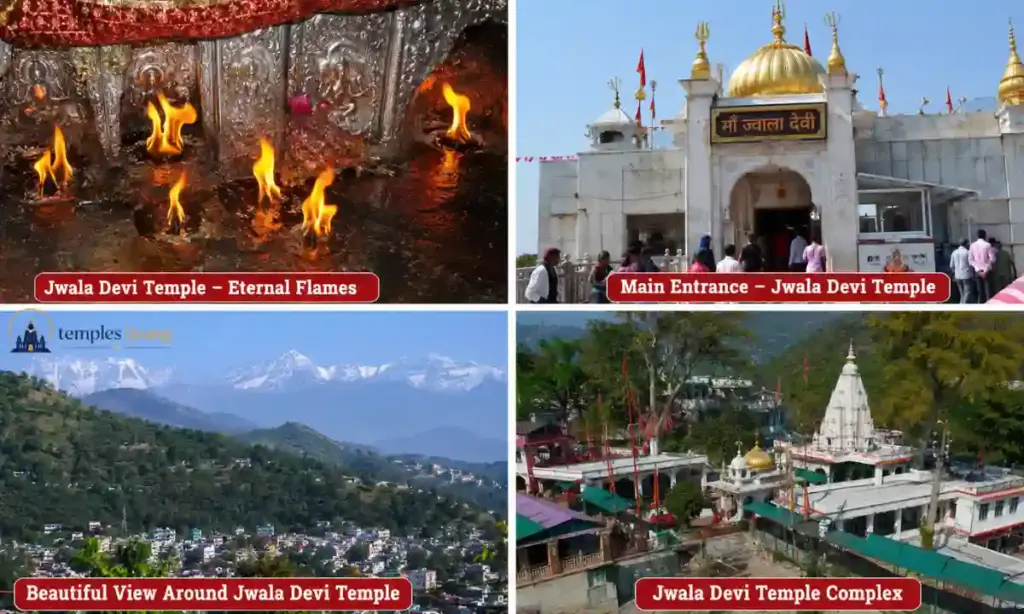
Jwala Devi Temple of Himachal Pradesh is one of the most holy Shakti Peethas of India, located in the district of Kangra, Himachal Pradesh. Unlike most other Hindu temples, there is no idol in the inner chamber of this temple. Instead, people pray to the eternal fire (Jyoti) that emanates out of rock cracks, which are considered to be the personification of Goddess Jwala Devi herself.
Millions of pilgrims visit this place every year, particularly during the periods of Chaitra Navratri and Sharad Navratri, when the atmosphere gets very much spiritual.
Quick Overview of Jwala Devi Temple
| Particular | Details |
|---|---|
| Temple Name | Jwala Devi Temple |
| State | Himachal Pradesh |
| District | Kangra |
| Town | Jwalamukhi |
| Main Deity | Maa Jwala Devi |
| Temple Type | Shakti Peetha |
| Famous For | Eternal Natural Flames |
| Best Time to Visit | March–April & September–November |
| Entry Fee | Free |
| Photography | Restricted inside Sanctum |
Why is Jwala Devi Temple Famous?
Devotees offer prayers at Jwala Devi Temple due to the reason that worshippers offer prayers not to any statue but to the natural flames that have been burning eternally for hundreds of years and represent the divine form of Goddess Shakti. As per Hindu religion, it is believed that this place marks the spot where the tongue of Goddess Sati fell down.
History of Jwala Devi Temple Himachal Pradesh
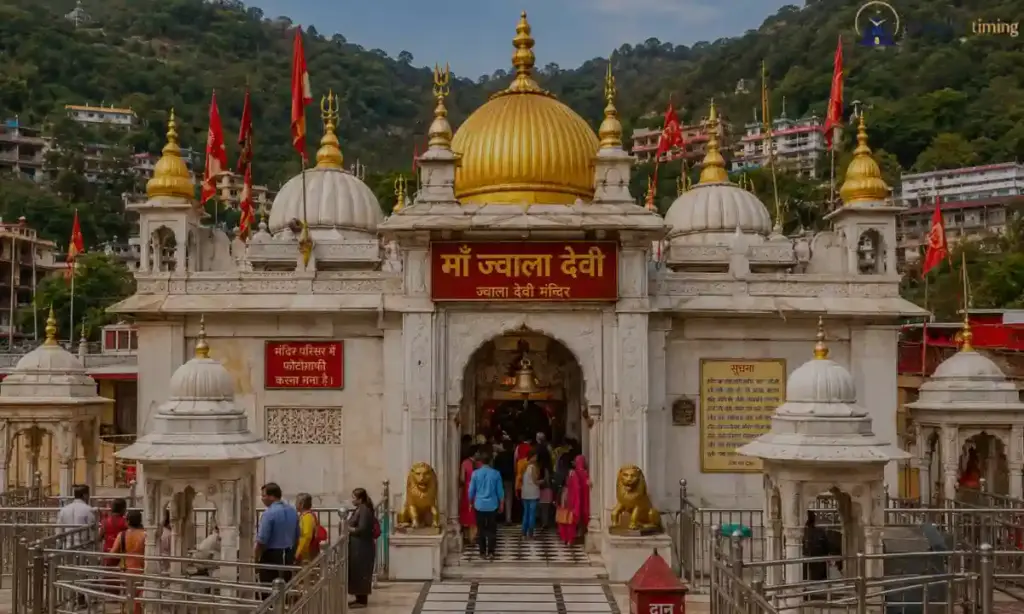
History of Jwala Devi Temple is interwoven in many ways with Hindu mythologies. In the epic of Daksha Yagna, the Goddess Sati took her life. Shiva Lord carried the body of Sati across the entire universe and then Lord Vishnu cut her body into pieces using his weapon, the Sudarshan Chakra. The place where Sati’s tongue fell gave birth to the current day Jwala Devi Temple.
Legends about Pandavas visiting this temple during their exile period are also found in ancient times. Historically, there has been an account of Raja Bhumi Chand discovering the holy flames and building the temple. Later on, several other kings rebuilt the temple, among whom one of the famous ones was Maharaja Ranjit Singh. He made a gold donation for the dome of the temple. There is another popular legend associated with Emperor Akbar who tried to put off the flames but failed.
Jwala Devi Temple Spiritual Significance
The temple stands as the everlasting source of energy of Goddess Shakti.
While in other places idols are worshipped in the temple, the nine flames worshipped here stand for different manifestations of the divine mother. The temple holds its reputation as the most spiritually powerful place in northern India.
Temple Timings of Jwala Devi
| Activity | Timing |
|---|---|
| Temple Opens | 5:00 AM |
| Morning Darshan | 5:00 AM – 12:00 PM |
| Evening Darshan | 4:00 PM – 10:00 PM |
| Temple Closes | 10:00 PM |
Timings may change during festivals, Navratri, and special occasions.
Jwala Devi Temple Location
The Jwala Devi Temple is located in the sacred town of Jwalamukhi in the Kangra district of Himachal Pradesh, India. Nestled in the picturesque foothills of the Dhauladhar mountain range, the temple sits at an elevation of approximately 610 meters (2,001 feet) above sea level. It is one of the most revered Shakti Peethas in Hinduism and attracts millions of pilgrims and tourists every year.
Aarti Timings of Jwala Devi Temple
The temple performs multiple daily aartis including:
- Mangal Aarti
- Panchopchar Puja
- Bhog Aarti
- Sandhya Aarti
- Sayan Aarti
Many devotees prefer attending the early morning Mangal Aarti for a peaceful spiritual experience.
Jwala Devi Temple Rituals and Puja Charges
General darshan is free for all devotees.
Common offerings include:
- Coconut
- Red Chunri
- Flowers
- Dry Fruits
- Prasad
- Ghee
- Kumkum
Special pujas and rituals are conducted by temple priests. Charges vary depending on the ritual selected and are announced by the temple administration at the time of booking.
Astrological Benefits of Visiting Jwala Devi Temple
According to Hindu beliefs, visiting Jwala Devi Temple may provide:
- Removal of negative energies
- Relief from Rahu and Ketu doshas
- Protection from evil influences
- Increase in confidence and courage
- Blessings for marriage and family harmony
- Better career opportunities
- Financial prosperity
- Mental peace
- Success in important life decisions
- Spiritual purification
These beliefs are based on traditional Hindu faith and spiritual practices.
Nearby Temples Near Jwala Devi Temple Himachal Pradesh
A tour of the Jwala Devi Temple of Himachal Pradesh becomes even more significant if it is accompanied by a tour of other famous temples in the Kangra district. A lot of people undertake the Shakti Peetha Circuit tour and visit a number of holy temples in one trip.
- Brajeshwari Devi Temple, Kangra
Situated at a distance of about 35 km from Jwala Devi Temple, Brajeshwari Devi Temple is considered as one of the most respected 51 Shakti Peethas. Dedicated to Goddess Brajeshwari, this temple has gained popularity owing to its fascinating history, architecture, and festivals.
- Chamunda Devi Temple
Located about 55 km away, Chamunda Devi Temple is situated along the river Baner at the foothills of the Dhauladhar range. Devotees come to worship at this holy shrine seeking blessings of protection, bravery, and mental tranquility.
- Chintpurni Temple
About 35 km from Jwala Devi Temple, Chintpurni Temple is another highly revered Shakti Peetha. It is believed that Goddess Chintpurni fulfills the wishes of devotees and removes worries and obstacles from their lives.
- Baglamukhi Temple, Bankhandi
The temple is located at a distance of about 30 km from Jwala Devi Temple and is a temple of Goddess Bagalamukhi who is among the ten Mahavidyas. It is visited by the devotees seeking success against their enemies and winning in legal battles.
- Baijnath Temple
Approximately 75 km away, Baijnath Temple is one of India’s oldest Lord Shiva temples. Built in the 13th century, it is admired for its remarkable Nagara-style architecture and peaceful surroundings.
- Naina Devi Temple
Situated around 170 km from Jwala Devi Temple, Naina Devi Temple is one of the most important Shakti Peethas in northern India. It is especially crowded during Navratri when thousands of devotees come for darshan.
- Kaleshwar Mahadev Temple
Located close to Pragpur, about 45 km from Jwala Devi Temple, Kaleshwar Mahadev Temple is dedicated to Lord Shiva. The serene environment and ancient architecture make it a peaceful place for meditation and worship.
Jwala Devi Temple Best Time to Visit
The most pleasant months are:
- March to April
- September to November
Navratri celebrations offer the grandest spiritual experience, although the temple becomes extremely crowded.
How to Reach Jwala Devi Temple?
By Air
Nearest Airport:
- Kangra Airport (Gaggal) – approximately 50 km
Taxi Fare:
- ₹1,500–₹2,500
By Train
Nearest Railway Stations:
- Jwalamukhi Road Railway Station
- Pathankot Railway Station
Taxi charges from Jwalamukhi Road usually range between ₹400 and ₹800 depending on vehicle type.
By Road
Regular buses operate from:
- Dharamshala
- Kangra
- Pathankot
- Chandigarh
- Delhi
Approximate Travel Cost
| Route | Cost |
|---|---|
| Route | Cost |
| Delhi to Jwala Devi Bus | ₹700–₹1,500 |
| Chandigarh to Jwala Devi | ₹500–₹1,000 |
| Kangra to Temple | ₹100–₹300 |
Nearby Attractions of Jwala Devi Temple
Kangra Fort
One of India’s oldest forts offering panoramic Himalayan views.
Dhauladhar Mountains
Perfect for photography and scenic sightseeing.
Baglamukhi Temple
Popular among devotees seeking protection and spiritual blessings.
Masroor Rock Cut Temple
Ancient rock-cut temple complex with remarkable architecture.
Chamunda Devi Temple
Another major Shakti temple located nearby.
Dharamshala
Ideal destination for nature lovers and Tibetan culture.
Other Famous Temples Near Jwala Devi Temple
- Chintpurni Temple
- Chamunda Devi Temple
- Brajeshwari Devi Temple
- Baglamukhi Temple
- Naina Devi Temple
- Baijnath Temple
Many pilgrims complete these temples together as part of a Himachal Shakti Peetha circuit.
Temple Architecture
The temple perfectly fuses the style of North Indian temples along with those of royal additions. The gold-plated dome, silver gates, carvings, and sacred flame rooms have created an exceptional spiritual ambience not found anywhere else in India.
Jwala Devi Temple Festivals Celebrated
Major festivals include:
- Chaitra Navratri
- Sharad Navratri
- Diwali
- Durga Ashtami
- Ram Navami
Lakhs of devotees visit during Navratri.
Facilities Available of Jwala Devi Temple
- Parking
- Shoe Stand
- Prasad Shops
- Drinking Water
- Toilets
- Accommodation Nearby
- Hotels and Dharamshalas
- Medical Assistance
- Local Transport
Accommodation Near the Temple
Visitors can choose from:
- Budget Hotels
- Family Hotels
- Dharamshalas
- Guest Houses
- Mid-range Resorts
Room prices generally start from around ₹700 per night and increase depending on season and amenities.
Jwala Devi Temple Local Food to Try
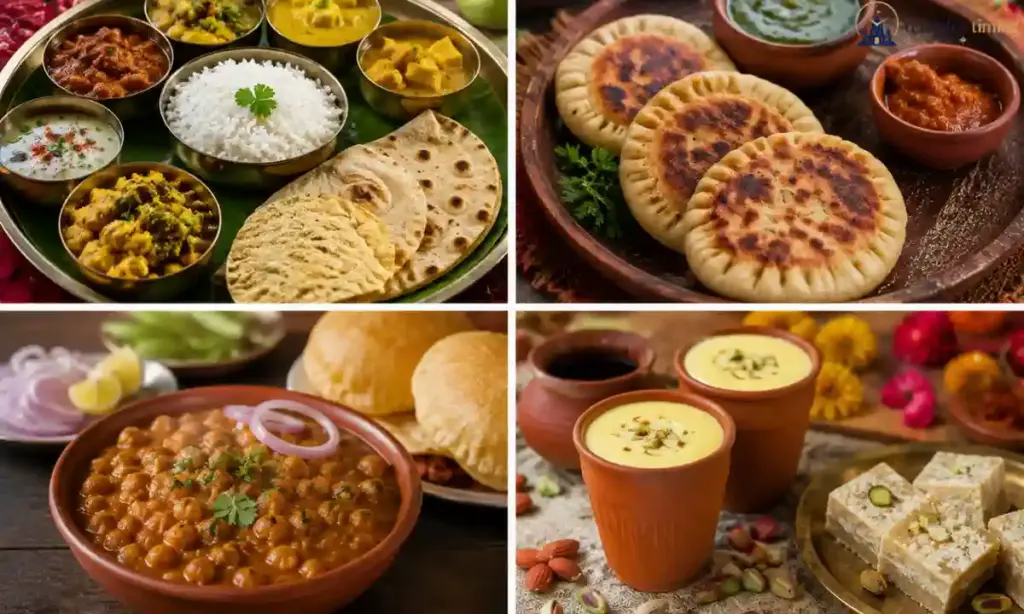
Popular local dishes include:
- Himachali Dham
- Rajma Chawal
- Chana Madra
- Siddu
- Babru
- Sweet Lassi
Travel Tips
- Reach early to avoid long queues.
- Carry warm clothes during winter.
- Wear comfortable walking shoes.
- Respect temple dress etiquette.
- Keep cash for offerings and local purchases.
- Avoid visiting during peak afternoon hours in festival seasons.
Interesting Facts About Jwala Devi Temple
- There is no idol inside the sanctum.
- Natural flames are worshipped as the Goddess.
- It is among the 51 revered Shakti Peethas.
- The temple has attracted pilgrims for centuries.
- The eternal flames continue to be the temple’s defining feature.
- Maharaja Ranjit Singh contributed to the temple’s golden dome.
One-Day Itinerary
5:30 AM – Reach temple
6:00 AM – Attend morning darshan
7:30 AM – Breakfast
9:00 AM – Explore temple complex
11:00 AM – Visit nearby attractions
2:00 PM – Lunch
4:00 PM – Evening darshan
6:00 PM – Local shopping
7:00 PM – Return journey
Shopping Near the Temple
Visitors commonly purchase:
- Chunri
- Coconut
- Religious idols
- Rudraksha
- Brass lamps
- Local handicrafts
- Prayer beads
- Dry fruits
- Souvenirs
Why You Should Visit Jwala Devi Temple?
Jwala Devi Temple is unique as it provides you with a spiritual experience where worship is not of idols but of the sacred fire that comes from nature itself. Located amidst the hills of Kangra, Jwala Devi Temple provides you with a wonderful combination of mythology, history, devotion, and natural beauty of the Himalayas.
Trivia
- Jwala Devi Temple is one of the few temples in the world where natural flames are worshipped instead of an idol.
- The temple is considered one of the most powerful Shakti Peethas in Hindu tradition.
- The sacred flames have inspired devotion, legends, and pilgrimages for centuries.
- Navratri is the busiest and most vibrant period at the temple.
- Pilgrims often combine visits to Jwala Devi, Chintpurni, Chamunda Devi, and Brajeshwari Devi in a single pilgrimage circuit.
Frequently Asked Questions (FAQs)
Where is Jwala Devi Temple located?
It is located in Jwalamukhi town of Kangra district, Himachal Pradesh.
Why is Jwala Devi Temple famous?
It is famous for its eternal natural flames that are worshipped as Goddess Jwala Devi.
Is there any entry fee?
No. General entry and darshan are free.
Which is the nearest railway station?
Jwalamukhi Road Railway Station is the nearest railhead.
Which airport is nearest?
Kangra Airport (Gaggal) is the nearest airport.
What is the best time to visit?
March–April and September–November are considered the best seasons.
Are special pujas available?
Yes. Special pujas and rituals can be arranged through the temple administration, subject to availability and applicable charges.
Also Read About: Ekambareswarar Temple Kanchipuram Timings: Darshan, Pooja Schedule, History, Entry Fee & Visitor Guide